

Effect of Prescribed Fire on Timber Rattlesnake Ecology and Physiology
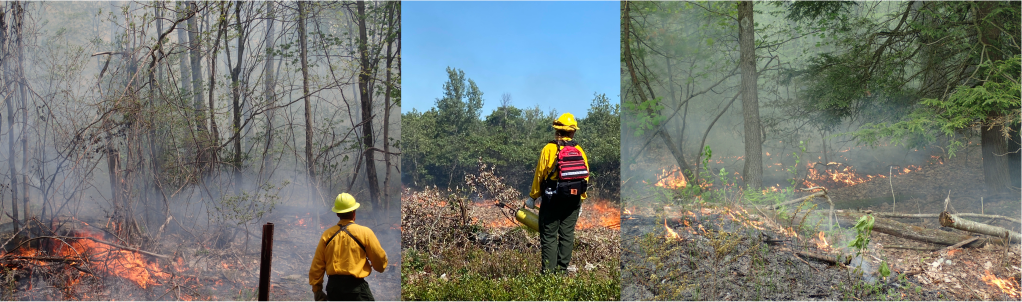
Prescribed fire has become a popular and effective forest management tool. There are many species of plant and animal that benefit from this landscape disturbance. However, it still remains unclear how some species, like timber rattlesnakes, respond to prescribed fire. My research tracks populations of timber rattlesnakes that reside in landscapes managed by prescribed fire. Much of my research focuses on the behavior of these animals, habitat use, thermoregulation, and reproductive success.
Effect of Ambient Light at Night on Green Anole Behavior and Physiology
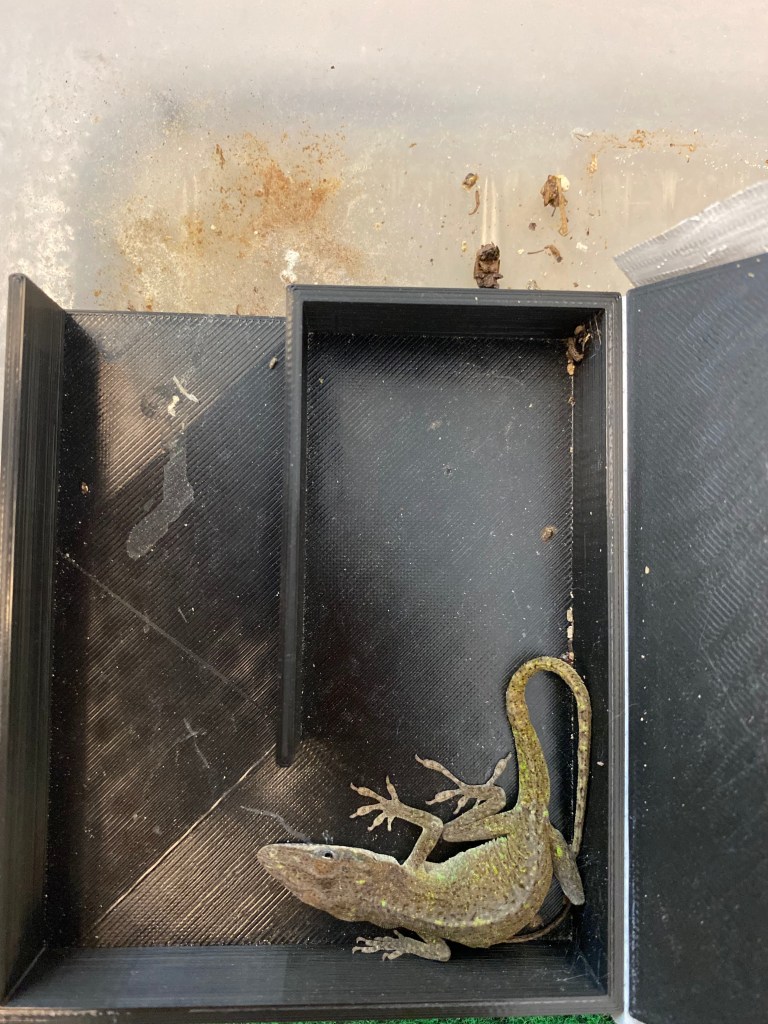
As human development continues to expand across the landscape, animals become more exposed to unnatural light sources during the night. This ambient light at night (ALAN) can affect behaviors and physiological rhythms within the body of the organism. Given that humans are a permanent fixture of the landscape, many animals must continue to live within these areas exposed to ALAN. This research aims to understand how ALAN affects behaviors (foraging, basking, male-male competition) and physiology (glucocorticoid concentrations, metabolic rates, testosterone). My research investigates if animals can use behavior to ameliorate any negative effects of ALAN while still taking advantage of any positive outcomes of ALAN. Further, research in my lab has branched out to look at indirect effects of physiological changes, such as changes in melanophore concentrations, bone density, and energy devoted toward maintenance of select tissues within the body.
The Effects of Habitat Use on Evolutionary Outcomes in Ectotherm Thermal Physiology
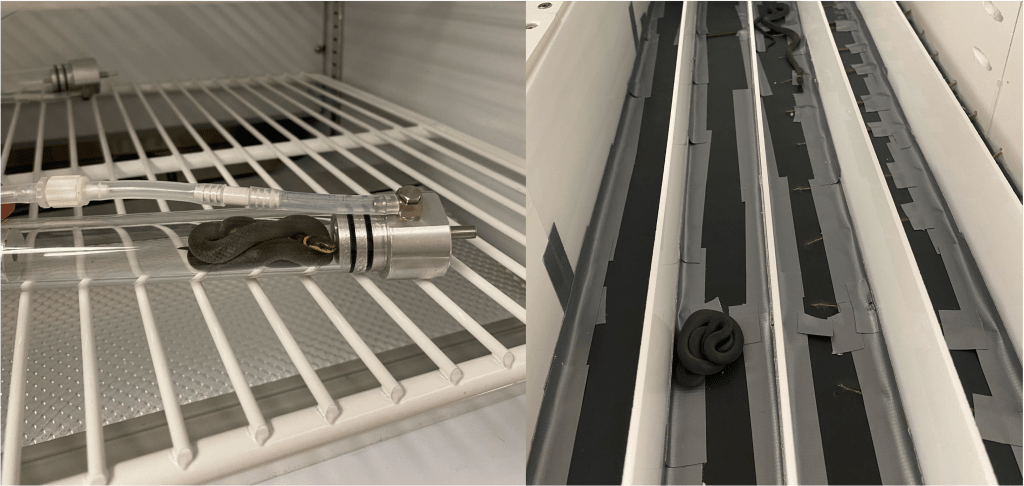
Selective pressures, such as environmental temperature, may lead to different evolutionary outcomes of ectothermic organisms whose body temperature is highly influenced by the surrounding environment. Ectothermic organisms that live in different environments with contrasting temperatures for many generations may lead to the selection for differing optimal performance temperatures for particular physiological functions. For example, some snakes are predominantly fossorial and are exposed to lower environmental temperatures throughout much of their life. Other snakes, however, are predominantly active on the surface and exposed to higher environmental temperatures. Much of this research focuses on if these differences in habitat characteristics correspond with differences in optimal temperatures for certain physiological performance measures, differences in preferred body temperatures, and differences in critical thermal maximum and minimum temperatures.
Red-backed Salamander Physiology in Burned Habitat
Prescribed fire can dramatically alter thermal characteristics and water availability within the habitat. Amphibians, like red-backed salamanders, may be impacted by these habitat changes. This research aims to determine differences in thermal preferences for red-backed salamanders in burned and unburned habitat. Additionally, this research will determine if thermal performance differs between these contrasting habitats. Whereas any differences in animal physiological mechanisms likely do not reflect evolutionary changes, they may reflect either plastic responses to this change in habitat or selection for particular animals within the population that exhibited select phenotypes.

 www.chowey.net